
The 20 Minutes After the Save
Alan J. Klingensmith | Actions Earn Respect
A few weeks ago, the Good News Network ran a story that’s been sitting with me ever since. There’s the part everyone shares. And then there’s the part underneath it, where the actual leadership lesson hides.
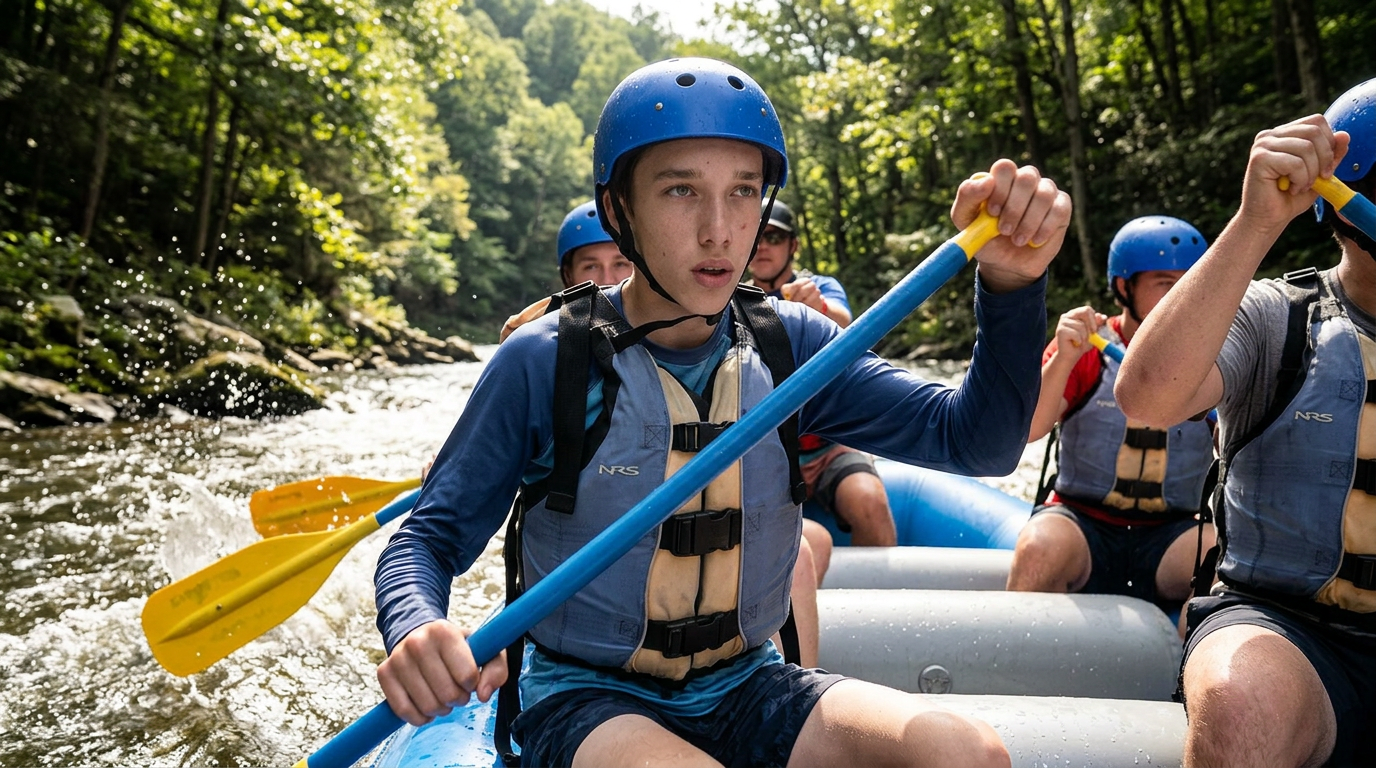
Devon Champenoy was 13 years old, riding the rapids of Georgia’s Blue Ridge Mountains with his scout troop from Houston. Class 3 rapids. Summer camp. Hot day. His scout leader, David Lemley, was at the stern of the raft when he lost his balance and fell in the first time. He climbed back in laughing into his helmet camera about how fun the water was. They kept going.
Then he fell in again.
This time was different. His foot got jammed under the seat of the raft. His head and torso went under. He was splayed out across the side, completely stuck. The only breaths he could grab came in the seconds when the water level dropped low enough for his head to break the surface. His helmet bought him time as his head bounced off rocks while the raft surged down the river.
Most 13-year-olds, in that moment, would freeze. Or panic. Or scream. Devon did something different.
He took a deep breath. He steadied himself. Then he climbed across the raft and pulled his scout leader’s foot free.
Kayakers got there in time to finish the rescue. Lemley later told KHOU 11 News, “I have no doubt that if Devon hadn’t released my foot I was going to die.” Devon’s reaction to that line in the same interview was almost flat. He said it took him a while to even take in the fact that it had happened.
That’s the moment everyone shares. That’s the moment the helmet camera caught. That’s the moment the news led with.
But here’s what stopped me on the second pass.
After the rescue, Lemley’s foot was broken. Kayakers had pulled him out, but the river wasn’t done with the rest of them. Twenty more minutes of rapids stood between that raft and the takeout. The leader was injured. The team was shaken. And nobody was sitting in the back seat to pilot.
So Devon, just 13, climbed into the pilot’s spot. And kept everyone calm. And kept everyone moving. For twenty more minutes.
Twenty minutes in class 3 rapids is not a paddle home. It is reading rocks. It is calling lines. It is keeping a crew of shaken teenagers focused while one of them stares at an injured adult on the floor of the raft. A grown man with a broken foot. A river that does not care that you are 13.
Hold that picture in your head for a minute.
Most stories about young heroes stop at the hero moment. The save. The grab. The pull. The photo of someone holding a medal next to the person whose life they saved. (Devon got that medal, by the way. The Honor Medal with Crossed Palms. Fewer than 300 of those have been awarded in the 100-plus year history of the Boy Scouts of America. He also got a special recognition from the governor of Texas.)
But heroism is a moment. Leadership is what happens next.
Anyone can rise for thirty seconds. Adrenaline carries people through almost anything for half a minute. The real question, the one that separates leaders from heroes, is what you do when the crisis passes and the work isn’t done yet.
Think about the seasons in your own life when the crisis was over but the job wasn’t.
The big game your team lost. The week after.
The presentation that fell apart in front of the class. The next morning.
The friend who needed you on the worst night of their year. The Monday after.
The teammate who got cut. The locker room the next day.
The breakup. The bad grade. The group text that blew up. The disappointment that didn’t go away when the bell rang.
The moment everyone is watching is the easy part. People rise. People perform. Devon released a foot. Brave, sure. But almost predictable in a way. That’s what training is for. The harder part is the twenty minutes after.
When nobody is filming. When the rush is gone. When the team is shaken and the adults are hurt and the water is still moving and somebody has to sit in the back of the raft and keep the boat pointed downstream.
That’s where leadership actually lives. Not in the save. In the steering.
There’s something quieter inside this story too.
Before Devon climbed across the raft, before he reached for the foot, before he did anything brave at all, he did one thing first. He took a breath. He steadied himself. That’s in his own words from the interview.
Take a beat on that. A 13-year-old kid. His scout leader drowning ten feet away. Water roaring around him. Rocks slamming the raft. And his first move wasn’t to lunge. It was to breathe.
That’s not weakness. That’s not hesitation. That’s the move that made everything after it work.
The people who panic don’t get the foot loose. The people who lunge slip and miss. The people who breathe first are the ones who actually pull it off.
If you’re trying to lead anywhere in your life right now, your team, your friend group, your family, your classroom, your house, write that one down somewhere you’ll see it.
The breath comes before the move.
And here is the thing about training. Devon was trained. Scout camps. Water drills. Swift-water rescue exercises. His body knew what to do when the moment came. But training only writes the muscle memory. Character decides whether you act on it. Plenty of trained people freeze when the water is real. The training is the floor. The breath is the door.
If you want to build the kind of courage that shows up when the adults can’t, that’s the thing I wrote Actions Earn Respect about. Not for the kid who already knows what to do. For the kid in the middle of the raft, still figuring out whether he’s the one who steers. It’s full of stories like this one and the small daily moves that turn a regular student into the person other people can count on when the moment turns. Worth a look if that’s where you are right now.
One last thing.
Devon didn’t tell anyone he wanted that medal. He didn’t post about the rescue. The story only came out because Lemley, the man whose life he saved, recommended him for the commendation. Devon’s job was to do the thing. Other people’s job was to notice.
You don’t have to broadcast leadership. You just have to live it. The right people will see.
Heroes get the medal. Leaders steer the boat home.