
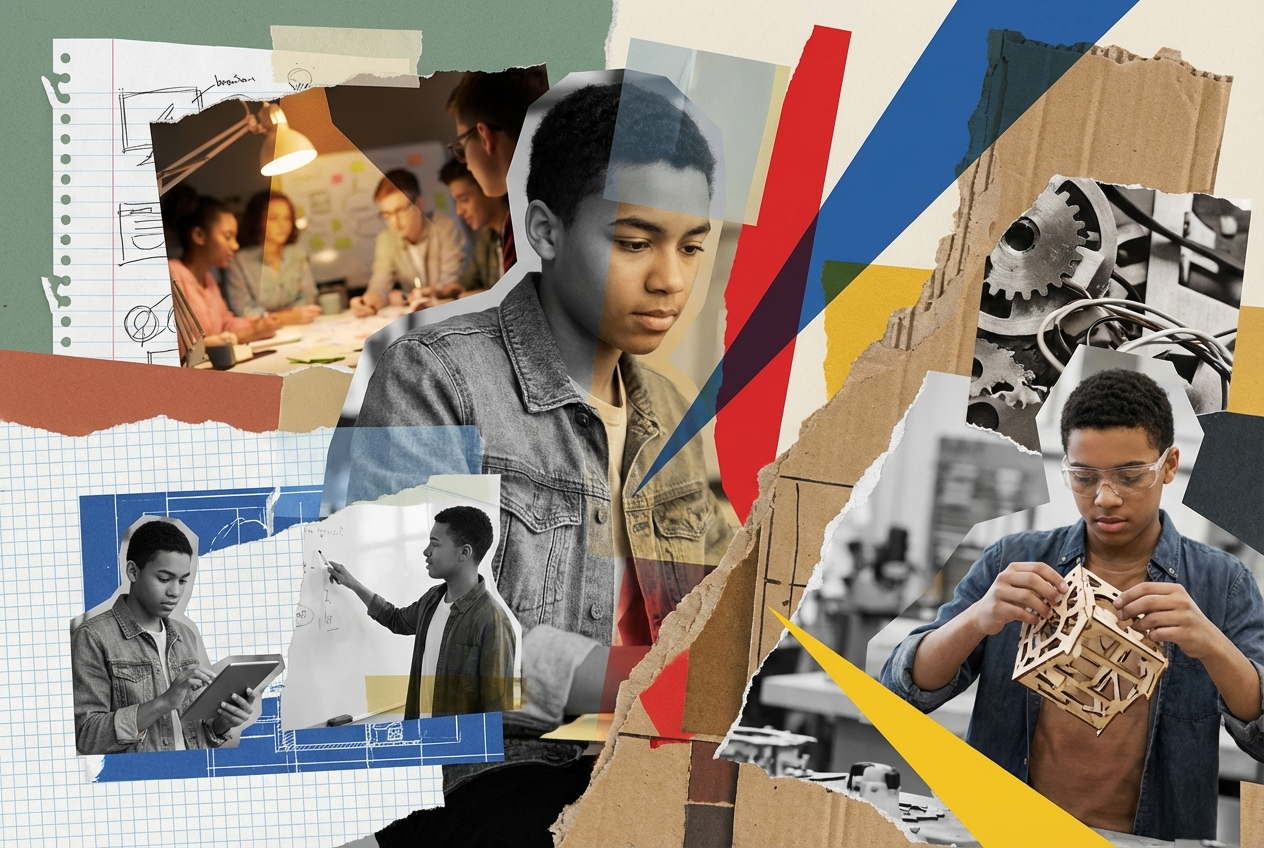
Most students have ideas.
They think about starting something, improving something, or creating something new. But most of those ideas never move beyond a conversation.
The gap is not creativity.
It is execution.
Turning a small idea into a real project is one of the most valuable skills a student can develop. It requires action, planning, and follow through. These are the same skills used in business, leadership, and professional environments.
Students who learn how to execute ideas early gain an advantage.
They stop waiting and start building.
Imagine a student who notices a problem.
Students in their school struggle to find information about upcoming events. Announcements are inconsistent, and many students miss opportunities.
The student mentions the issue to friends. Everyone agrees it is a problem.
Then the conversation ends.
A different student responds differently.
They decide to do something about it.
They create a simple system to organize and share information. Maybe it starts as a shared document, a basic website, or a social media page.
At first, the project is small.
But over time, it improves.
More students begin using it. The system becomes more organized. The project grows into something useful.
The difference between the two students is not intelligence.
It is action.
Every project starts small.
Many students hesitate because they think their idea needs to be perfect before they begin. They wait until they have a complete plan, the right resources, or full confidence.
That delay often stops progress.
Projects do not begin with perfection.
They begin with a first step.
Starting small reduces pressure.
Instead of trying to build something large immediately, students can focus on creating a simple version of their idea.
A basic version provides something to test and improve.
Progress begins once something exists.
After starting, structure becomes important.
Ideas without structure tend to lose direction.
Students need to define a clear goal.
What is the purpose of the project?
What problem does it solve?
Who is it for?
Answering these questions creates focus.
With a clear goal, students can begin organizing tasks.
What needs to be done first?
What resources are required?
Who might help?
Structure turns ideas into plans.
Taking ownership is another key part of building a project.
Many students expect others to lead or take responsibility.
Projects often stall when everyone waits.
The student who moves forward takes ownership.
They make decisions. They organize tasks. They follow through on commitments.
Ownership does not mean doing everything alone.
It means being responsible for making sure progress continues.
This mindset separates ideas from results.
As projects develop, students encounter obstacles.
Plans do not always work the way they expect. Resources may be limited. People may not respond. Time may become a challenge.
These moments test commitment.
Students who succeed focus on adjusting instead of stopping.
They ask practical questions.
What can be changed?
What is still possible?
What is the next step?
Problem solving becomes part of the process.
Projects improve through challenges.
Another important part of building a project is consistency.
Many students start with energy but lose momentum over time.
Projects require steady effort.
Even small progress each week keeps a project moving forward.
Consistency builds results.
Students who commit to regular progress often complete projects that others abandon.
Feedback also plays a role in improving projects.
Students may assume their idea is working well, but outside perspectives often reveal areas for improvement.
Asking for feedback helps refine the project.
What works well?
What could be better?
What is missing?
Listening to feedback allows students to make adjustments that improve the outcome.
Professional environments rely heavily on feedback.
Projects provide a chance to practice using it effectively.
Another benefit of turning ideas into projects is skill development.
Students practice planning, communication, problem solving, and decision making.
These skills are transferable.
They apply to leadership roles, careers, and future opportunities.
Projects also help students discover strengths.
Some students enjoy organizing tasks. Others prefer creative work. Some excel at communication.
Projects reveal these strengths through experience.
Completing a project is just as important as starting one.
Many students begin projects but never finish them.
Completion builds credibility.
When students finish what they start, others begin to trust their ability to follow through.
This trust leads to more opportunities.
Finished projects also provide evidence of experience.
Students can describe what they built, how they solved problems, and what they learned.
These experiences become valuable in applications, interviews, and future work.
The process of turning ideas into projects teaches a simple lesson.
Action creates opportunity.
Students who act on ideas gain experience. Students who wait often miss those opportunities.
Projects do not need to be large to be valuable.
Small projects still teach important skills.
What matters is taking the first step and continuing forward.
Practical Action Steps
• Choose one simple idea and take the first step to start it this week
• Define a clear goal so your project has direction and purpose
• Commit to making consistent progress, even if it is small each time
Ideas are common.
Execution is rare.
Students who learn how to turn ideas into real projects develop skills that set them apart. They become problem solvers, organizers, and leaders.
Over time, each project builds confidence and experience.
And those experiences create opportunities that would not exist without action.
Research Insight
Research from the Journal of Educational Psychology shows that students who engage in project based learning demonstrate higher levels of motivation and problem solving ability. Taking ownership of projects helps students apply knowledge in real situations and strengthens long term learning.
The research also indicates that students who complete projects build stronger confidence and persistence when facing new challenges.
- What idea have you been thinking about but have not started yet?
- What is one small step you could take today to move that idea forward?
- Do you usually finish the projects you start, or leave them incomplete?