
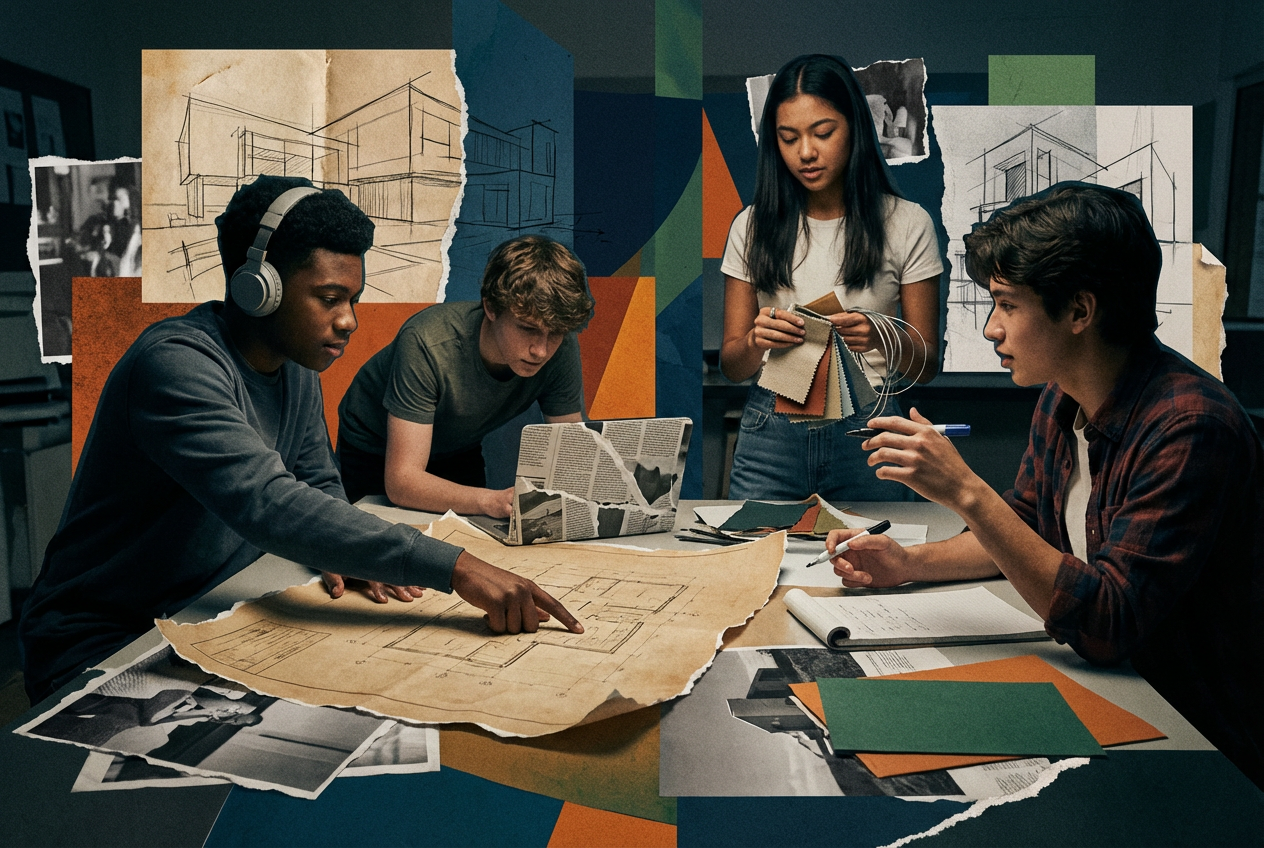
Many students believe experience begins after graduation.
They assume real experience only happens in college, internships, or full time jobs. School assignments often feel separate from the kind of work adults do in professional environments.
But experience does not begin after school.
It begins the moment a student takes ownership of a project.
Student projects can become some of the most valuable learning experiences in high school. When students organize events, build ideas, solve problems, or create something from scratch, they begin practicing the same skills professionals use every day.
Planning, communication, decision making, teamwork, and problem solving all appear in student projects.
The difference is that school provides a safe environment to learn these skills before the stakes become higher.
Students who take projects seriously often graduate with more experience than they realize.
Imagine a group of students organizing a school event.
At first the idea seems simple. They want to host an activity that brings students together and raises awareness for a cause.
But as soon as planning begins, they discover how many moving parts are involved.
They must reserve space, create a schedule, communicate with participants, organize materials, and make sure everything runs smoothly on the day of the event.
Unexpected problems appear along the way.
A speaker cancels at the last minute. Supplies arrive late. Attendance is lower than expected.
Students quickly realize that organizing a project requires more than enthusiasm.
It requires planning, adaptability, and responsibility.
By the time the event is finished, those students have learned lessons that no worksheet could provide.
They experienced what it feels like to manage a real project.
Student projects provide something that traditional assignments rarely offer.
Ownership.
When students truly own a project, they care about the outcome. They want the project to succeed because it reflects their effort and reputation.
Ownership encourages deeper engagement.
Instead of completing tasks only for a grade, students begin thinking about results. They ask questions about improvement, efficiency, and impact.
This shift from completion to ownership is where real learning begins.
Professionals operate with ownership every day.
Students who practice it early develop a powerful advantage.
Planning is one of the first skills students develop through projects.
Successful projects rarely happen by accident.
Someone must outline the goal, define responsibilities, and establish timelines. Without planning, even simple ideas can become chaotic.
Students who plan effectively learn how to break large goals into smaller steps. They learn how to estimate how long tasks will take and how to coordinate with others.
These planning habits appear in nearly every professional field.
Engineers plan projects. Entrepreneurs plan business strategies. Event coordinators plan logistics. Managers plan workflows.
Project planning teaches students how to organize complex work.
Communication is another skill that grows quickly during projects.
Projects require students to exchange information regularly. Plans change, responsibilities shift, and new ideas appear.
Clear communication prevents confusion.
Students learn to explain tasks clearly, confirm expectations, and update teammates when something changes.
They also learn to listen to feedback and consider different perspectives.
These communication habits mirror professional teamwork.
In most workplaces, communication determines whether projects succeed or fail.
Students who develop this skill early adapt more easily to collaborative environments.
Projects also teach students how to handle responsibility.
When a project depends on multiple people, every task matters.
If one person fails to complete their work, the entire project can suffer. This reality helps students understand how their actions affect others.
Responsibility becomes more meaningful when real outcomes are involved.
Students begin to recognize that reliability builds trust. When teammates know they can depend on someone, collaboration becomes easier.
This understanding prepares students for professional environments where responsibilities are interconnected.
Problem solving is another skill that develops naturally during projects.
No project unfolds perfectly.
Unexpected challenges appear during planning, preparation, or execution. Students must decide how to respond when those problems occur.
Instead of giving up, successful project leaders focus on solutions.
They ask practical questions.
What needs to change?
What resources are still available?
What is the next step?
Learning to adjust plans and continue moving forward builds resilience.
Professionals encounter these situations regularly. Projects provide a chance to practice those skills early.
Student projects also help build confidence.
When students successfully complete a meaningful project, they realize they are capable of more than they expected.
Organizing an event, launching a small initiative, or solving a complex problem creates a sense of accomplishment.
Confidence grows through experience.
Students who have completed real projects enter future opportunities with greater self belief. They understand how to approach challenges because they have done it before.
This confidence becomes valuable during internships, leadership roles, and future careers.
Another important benefit of student projects is skill discovery.
Students often discover new strengths while working on projects.
Someone who volunteers to manage logistics may realize they enjoy organization and planning. Another student who presents ideas may discover strong communication abilities.
Projects reveal talents that students may not recognize through traditional classroom work.
These discoveries can influence career interests and future goals.
By trying different types of projects, students explore what kind of work feels meaningful and engaging.
Student projects also create stories.
When students apply for internships, scholarships, or jobs, they are often asked about experiences where they solved problems, led teams, or organized initiatives.
Students who have worked on projects can describe real situations.
They can explain challenges they faced, decisions they made, and lessons they learned.
These stories demonstrate practical experience.
Employers and educators value examples of initiative and responsibility.
Projects transform abstract skills into real evidence.
The most important lesson from student projects is simple.
Action teaches more than observation.
Students can read about leadership, teamwork, and planning. But understanding these ideas deeply requires experience.
Projects provide that experience.
They allow students to practice responsibility, collaboration, and decision making in real situations.
Over time, each project builds a stronger foundation of skills.
Practical Action Steps
• Start a small project that solves a real problem or improves something in your school or community
• Volunteer to take responsibility for planning or organizing part of a group assignment
• Reflect on each project you complete and identify what skills you improved during the process
Student projects may seem small at first.
A school event, a research initiative, or a community activity might not feel like professional work.
But the skills developed through these projects mirror the skills used in careers and organizations around the world.
Students who seek out meaningful projects gain experience earlier than most people expect.
They learn how to plan, communicate, solve problems, and lead teams.
Those lessons become valuable long after the project ends.
Research Insight
Research published in the Journal of Educational Psychology shows that project based learning significantly improves student engagement and problem solving ability. Students involved in hands on projects demonstrate stronger collaboration skills and higher levels of critical thinking.
The research indicates that real world projects help students apply knowledge in practical situations, strengthening both academic understanding and leadership development.
- What type of project would allow you to practice leadership or organization skills?
- When working on projects, do you usually take ownership or wait for others to lead?
- What lesson have you learned from a project that a normal assignment could not teach?