
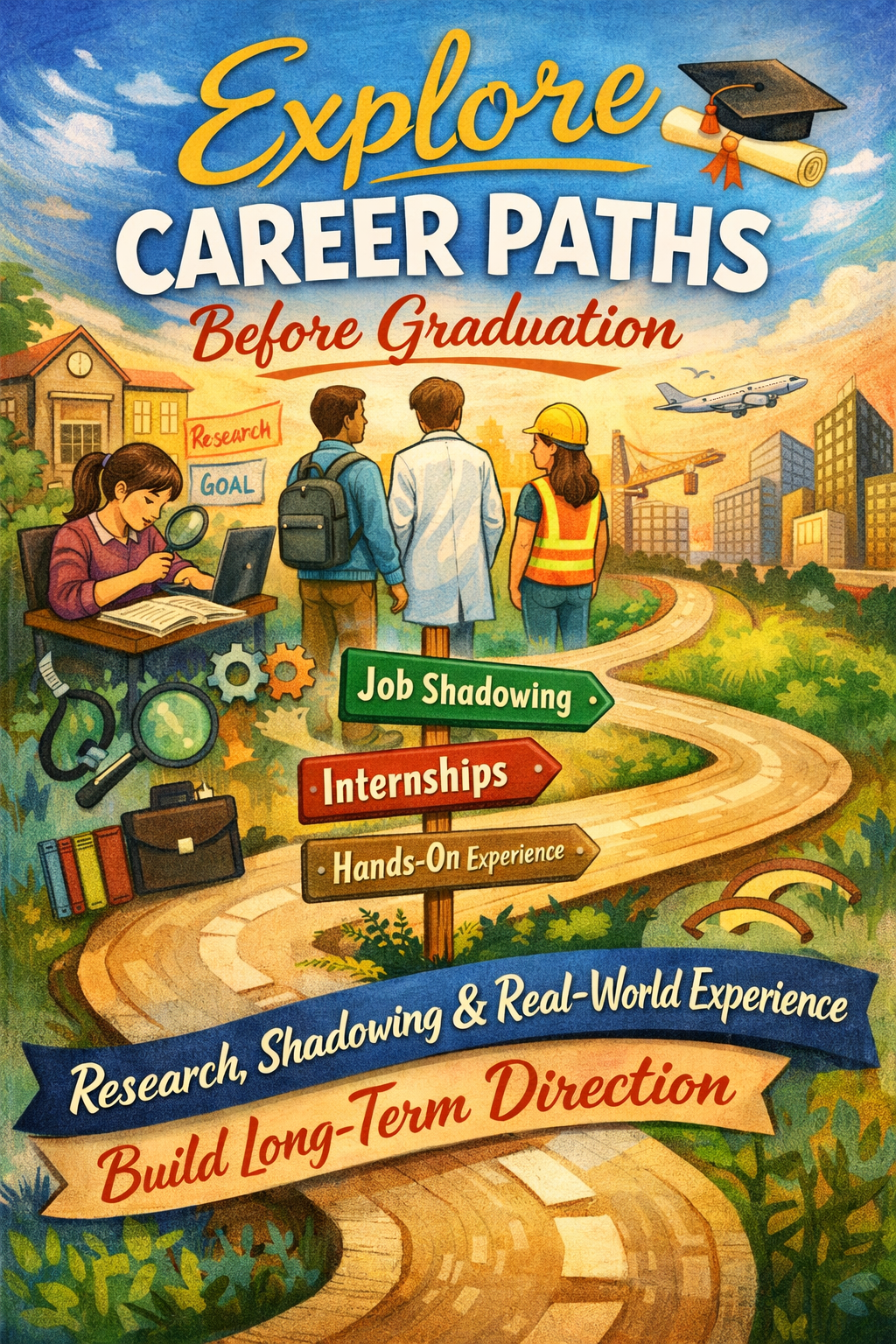
You Do Not Have to Guess Your Future
Many students feel pressure to pick a career fast.
Doctors. Lawyers. Entrepreneurs. Influencers.
But most students are choosing based on what sounds impressive, not what fits their strengths or interests.
Real leaders do not guess. They investigate.
Career awareness is not about locking in your future at 16. It is about testing, observing, and learning before the stakes are high. The earlier you explore, the fewer wrong turns you take later.
That is ownership.
Why Waiting Is a Mistake
If you wait until senior year to think about careers, you limit your options.
Classes are already chosen. Time is short. Applications are due.
But students who explore early build clarity. They start noticing patterns. They learn what they enjoy and what drains them.
Respect is earned through consistent action. That includes preparing for life after graduation.
When you take small steps now, you build a reputation as someone who plans ahead instead of reacting late.
A Real Example
Imagine a sophomore who says, “I think I want to work in business.”
That is too broad.
Instead of just saying it, she emails a local marketing agency and asks to shadow someone for a day. She notices how much time they spend on data analysis. She realizes she enjoys the creative side more than the numbers.
Now she knows something important.
That one action gives her direction. She might join a business club, take a marketing class, or volunteer to run social media for a school event.
That is leadership without a title. No one assigned her to explore. She chose to.
Practical Ways to Explore Career Paths
You do not need special connections. You need initiative.
Start here:
• Research three careers that interest you. Look at required education, daily tasks, salary ranges, and job growth.
• Ask a teacher, coach, or family friend if they know someone in that field. Request a short conversation or shadow day.
• Try a related activity at school. Join a club, enter a competition, or volunteer in a way that connects to that field.
• Get a part-time job or internship, even if it is small. Real experience teaches faster than online searches.
Notice what you enjoy. Notice what feels frustrating. Both are valuable data.
Discipline matters here. One conversation will not give you clarity. But consistent small actions will.
Career Awareness Builds Confidence
Students often say they lack confidence.
Confidence does not appear out of nowhere. It grows when you act.
When you research industries, talk to professionals, and test your interests, you gain knowledge. Knowledge reduces fear.
You stop saying, “I have no idea what I want to do.”
You start saying, “I am exploring marketing and engineering. I am learning which fits me better.”
That shift changes how teachers, mentors, and even colleges see you.
Small habits build long term reputation. Being the student who explores options early shows maturity.
Avoid These Common Mistakes
Do not pick a career just because it sounds impressive.
Do not follow friends blindly.
Do not assume social media shows the full truth about any profession.
And do not use confusion as an excuse to do nothing.
Ownership means moving forward even when you do not have all the answers.
Your Next Step
You do not need a perfect five year plan.
You need one next action.
Send one email. Research one field. Ask one adult a thoughtful question.
Leadership is not about titles. It is about initiative.
Start exploring now so graduation feels like a launch, not a panic.
Reflection Questions
- What career fields have I researched in detail, not just heard about?
- Who could I contact this month to learn more about a job I am curious about?
- What school activity could I join that connects to my possible interests?
- Am I waiting for clarity, or am I creating it through action?